Memphis: Site Dossier and Early Capital
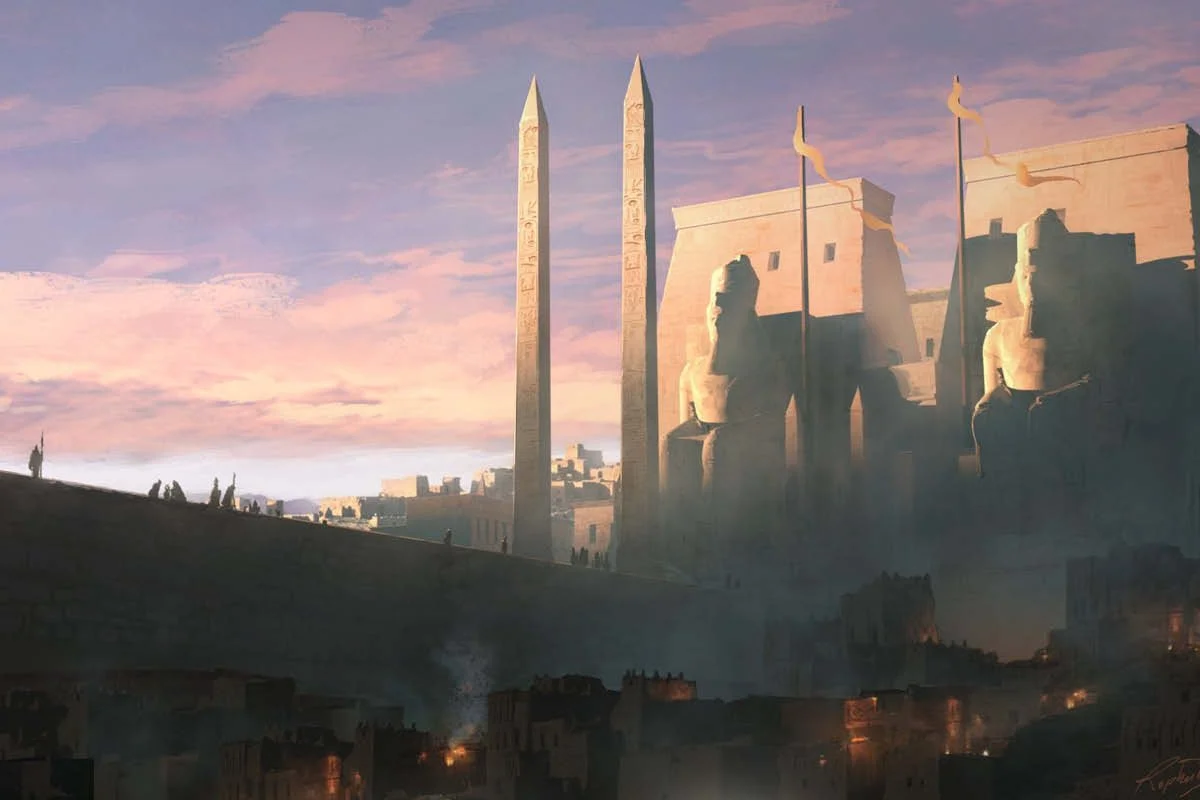
Luxor-like pylon imagined by Raphael Lacoste [Concept art].
Say “Memphis” and picture a city where river roads met desert roads. Set near today’s Mit Rahina, it sat at the hinge between the Nile Valley and the Delta, which made it a natural administrative hub for centuries. From here, officials counted grain, moved stone, and staged power while nearby Saqqara handled royal memory. For broader context, keep our overviews of ancient Egyptian architecture, the map of ancient Egypt, and the story article Memphis: first capital close by.
Definition
Memphis (Ineb-hedj): Egypt’s early capital near modern Mit Rahina, positioned where the Nile Valley meets the Delta.
Where Memphis sat—and why that spot mattered
Memphis grew on slightly raised ground along the west bank, close to where the river begins to fan into the Delta. That location did three things at once: it controlled traffic between Upper and Lower Egypt, it simplified logistics (grain, stone, timber could move by water), and it anchored the court beside major cemeteries on the desert edge. The city’s sacred core centered on the temple of Ptah, a creator god tied to craftsmanship and state order. Around it, palaces and administrative quarters—mostly in mudbrick—rose and were rebuilt as the river shifted over time. Because mudbrick decays, the skyline is gone; what survives are foundations, courts, magazines, and inscriptions that point to a long-lived administrative heart.
Step out toward the dunes and the picture clicks into a wider map: Saqqara, Abusir, and Giza line the desert ridge to the west and north. That chain of cemeteries isn’t an accident. Memphis handled the living machine of the state; the ridge handled memory and ritual. If you like to read a plan as a story, Memphis and Saqqara are two voices in one conversation—counting and keeping beside honoring and staging.
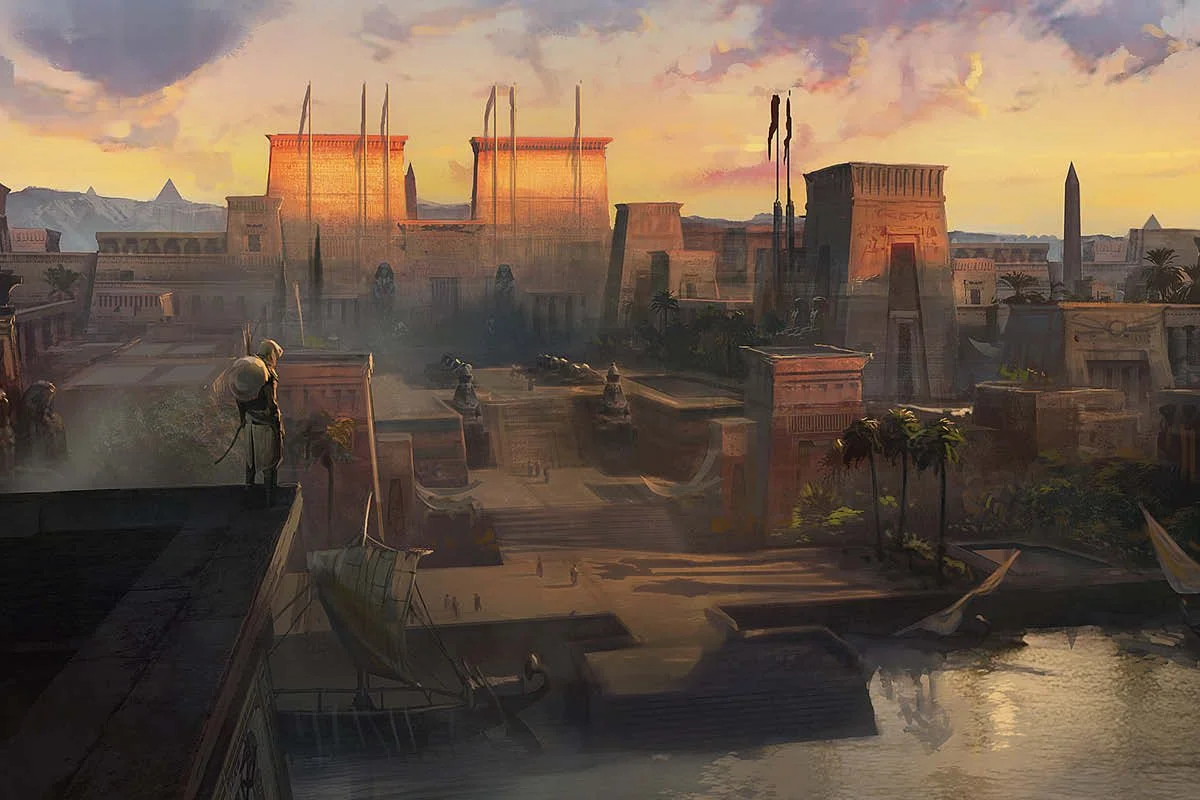
Temple city at dusk [Concept art].
What the city likely looked like through time
Because the Nile migrates, Memphis is a layered site. Early levels (First–Second Dynasty) point to storeyards and elite tombs in the northern zone, with workshops feeding court demand. By the Old Kingdom, the Ptah precinct stabilizes as a monumental anchor, while canals and roads feed quarries and pyramid projects up and down the plateau. Middle and New Kingdom phases keep Memphis in play as a residence city, even when court interest shifts south to Thebes; garrisons, workshops, and embassies make it a working capital. In the Late Period and under the Ptolemies, temples are renewed, and the city stays important even as Alexandria rises. Continuity comes from function more than skyline: Memphis keeps counting, storing, crafting, and hosting ritual as dynasties change.
Architecturally, expect rectilinear compounds: walls that filter access; courts for mustering people and goods; long magazines for grain and oil; sacred halls within the Ptah complex tied to festival routes that reach the cemeteries. It’s the same clear sequence you’ll meet elsewhere in Egypt—gate → court → hall → core—and it explains why Memphis held power for so long.
What to look for today (and nearby)
Modern visitors meet Memphis as a site constellation. In Mit Rahina’s open-air museum you’ll see the colossus of Ramesses II (fallen, then sheltered), an alabaster sphinx, and blocks from the Ptah precinct that fix the sacred core on the map. A short ride puts you at Saqqara, with the Step Pyramid zone, mastabas, and the Serapeum galleries for the Apis bulls—rituals tied to Memphis’ Ptah cult. North lie Abusir and Giza, extending the Memphis cemetery field. Read these not as separate attractions but as one city system stretched from green floodplain to desert edge: administration below, commemoration above.
To place Memphis in your mental atlas, pair this dossier with Memphis: first capital for the origin story and the map of ancient Egypt for routes and neighbors.
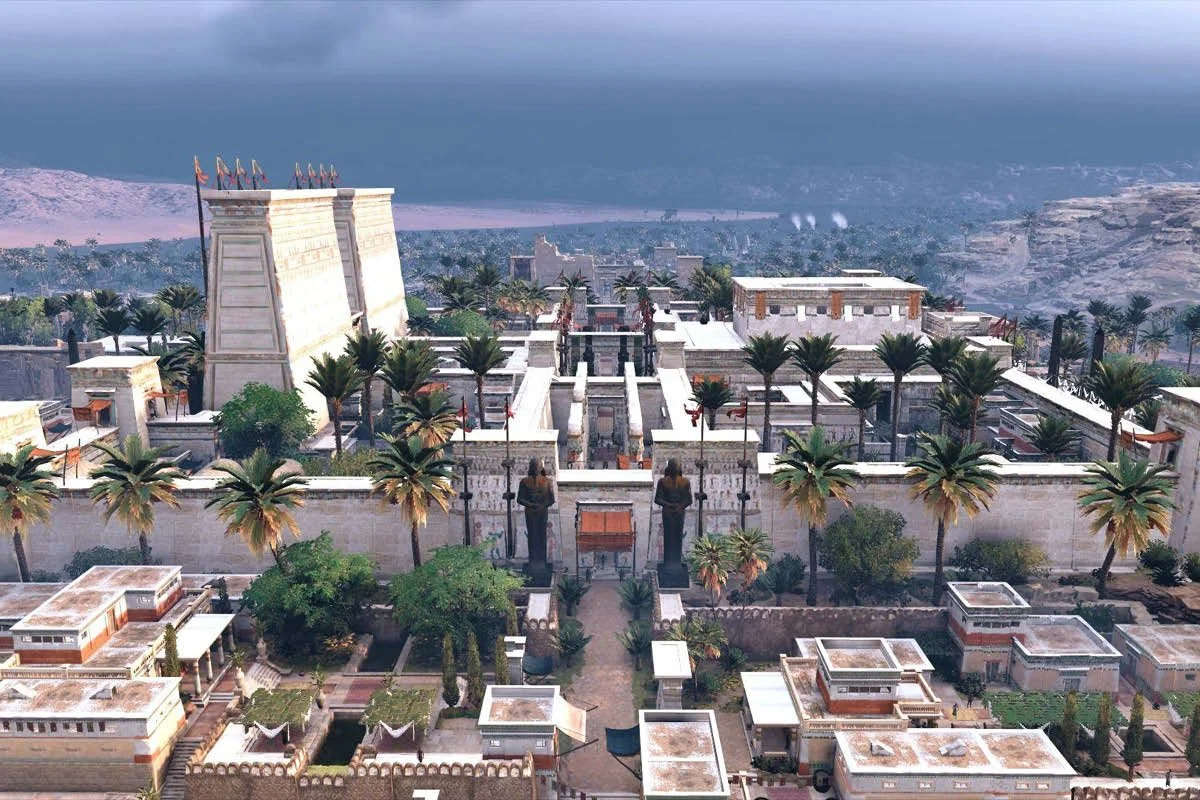
Bird’s-eye of a temple precinct [Game/Concept art].
Timeline in brief
Early Dynastic (c. 3000–2686 BCE): Memphis emerges near the unification moment as a residence and administrative center, while elite/royal burials develop at Saqqara and Abydos.
Old Kingdom (2686–2181 BCE): Peak state logistics; pyramids rise along the Memphis ridge (Saqqara, Abusir, Giza, Dahshur), with Memphis coordinating labor, storage, and ritual supply.
Middle & New Kingdoms: Even when Thebes leads royal ceremony, Memphis remains a military, diplomatic, and industrial hub.
Late–Ptolemaic–Roman: Renewed building in Ptah’s precinct; Memphis continues as a ritual-administrative node despite competition from Alexandria.
Conclusion
Memphis isn’t a ruin you cross off a list; it’s the organizing center that made the pyramid fields possible and kept Egypt governable at scale. Fix three ideas and the site stays clear: river junction, Ptah precinct, and Saqqara ridge. With those, you can read any period’s remains and understand why this place—more than any single monument—held Egyptian power together for so long.
You may also like